

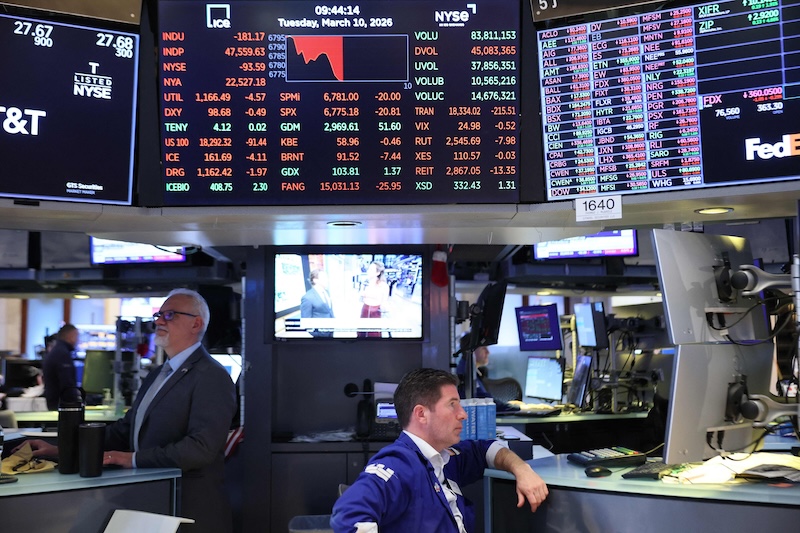
Dubbed by the Internet as “Epstein Fury” and by the Iranian foreign minister as “Epic Mistake”, Trump's and Netanyahu’s war on Iran has become extremely costly for the global business. Trump’s war on Iran continues to reshape global markets amid ongoing escalations. Global equities lost more than $6 trillion in value since the first strikes and threats around the Strait of Hormuz triggered shock across energy and transport markets.
"This is the biggest 'I told you so in history, "Qatar's Foreign Ministry spokesman Majed al-Ansari said during a press conference on March 10.
Financial markets reacted within hours of the first attacks. Global market capitalisation fell from $157.5 trillion to $151.5 trillion by March 8. The drop erased months of gains across major exchanges in the United States, Europe, and Asia. The Dow Jones Industrial Average fell more than 750 points after the first wave of strikes.
Investors moved funds out of equities and into assets seen as safe during conflict. Gold rose 12 per cent to about $2,800 per ounce. United States Treasury bonds drew demand as yields moved near 4.5 per cent. Bitcoin rose near 20 per cent during early trading sessions that followed new reports of attacks and missile launches.
Oil markets saw the fastest reaction. Brent crude rose from near $70 per barrel before the war to more than $110 as traders priced risk to the Strait of Hormuz. The waterway carries about one fifth of the oil traded across the world. Iranian naval threats and missile exchanges near Gulf shipping lanes forced tanker operators to halt or reroute traffic.
Energy traders warned that a long closure of the strait would drive prices above $120 per barrel. Gasoline prices in the United States rose toward $4 per gallon as fuel suppliers passed costs through supply chains. Inflation in the eurozone rose by about 0.5 percentage points after the first month of disruption.
Qatar also halted parts of its liquefied natural gas production after missile threats near offshore facilities. The halt pushed gas prices in Europe toward levels last seen during the energy crisis in 2022. Import dependent states across the European Union reported pressure on manufacturing costs.
Air transport suffered direct losses after several Gulf states closed airspace. Emirates and Qatar Airways grounded thousands of flights as missile alerts spread across the region.
Tourism across the Gulf collapsed after attacks on sites in Qatar and the United Arab Emirates. Hotels in Doha, Dubai, and Abu Dhabi reported booking falls of 80 per cent within weeks of the first missile strikes. Tour operators across Europe and Asia withdrew packages that include stops in the Gulf.
Industry estimates place tourism losses at $600 million per day across airlines, hotels, and cruise operators. Travel demand across other regions also fell as travellers postponed long distance trips amid security alerts.
The conflict also placed pressure on growth forecasts in the United States. Analysts said economic expansion faces a drag between 0.1 and 1 per cent if energy prices remain high through the year. The Federal Reserve paused plans for interest rate cuts after inflation began to rise again through energy costs.
Iranian leaders warned that the war will damage Western economies. Iranian foreign minister Abbas Araghchi described the campaign as an “epic mistake” during a briefing in Tehran. He said the strikes would “spread instability across the region and across markets”.
Officials in the Gulf issued similar warnings. Qatari foreign ministry spokesman Majed Al-Ansari said earlier warnings about escalation went unheeded. “This stands as the biggest ‘I told you so’ in history,” he said during a press briefing reported on March 10.
Markets continue to respond to each report from the conflict zone. Oil traders track tanker routes through the Gulf. Airlines monitor airspace alerts. Investors shift funds between equities and assets that hold value during conflict.
The financial cost of the war grows with each week of disruption across shipping, energy, transport, and tourism.
HT


