KAjwhriuw024hvjbed2SORH

A separate business account gives you clearer control over revenue, bills, and tax obligations. It also helps you build better habits around invoicing, spending, and record keeping. For new founders, that structure can prevent costly mistakes from the start.

If you are setting up a company or improving your financial workflow, choosing the right business account can make daily administration easier. A well designed business account supports payment visibility, cleaner bookkeeping, and faster decisions when cash flow changes. It should fit the way you sell, whether you invoice clients, take card payments, or manage online orders. Good account tools save time while giving you a better view of money coming in and going out.

Choosing the right account

Before you compare providers, map out how often payments arrive and how regularly your business pays suppliers, staff, or contractors. A sole trader may prioritise low fees and simple transfers, while a shop owner may need card settlements and multiple user cards. If remote access is important, an online business account can help you manage balances, payments, and receipts without visiting a branch. You should also review transfer pricing, foreign payment costs, and any limits on users or integrations. The right choice is not just about storing money safely, but about supporting how your business operates every week.

Preparation can make the application process smoother and less stressful. When opening a business account, most providers ask for proof of identity, registration details, and information about the people behind the company. Having those documents ready reduces delays and helps you respond quickly to verification requests. It is also worth checking how responsive customer support is before you commit. When you need to open a business account, a simple and transparent process is often a sign that the service is built for small businesses.

Managing payments efficiently

Once your account is active, strong routines become just as important as the account itself. Send invoices on time, set clear payment terms, and use automatic reminders to reduce delays. Many owners prefer online business account tools because they can track account activity, approve payments, and review cash flow from anywhere. Real time alerts can also help you catch failed transactions, duplicate charges, or unexpected fees before they become larger problems. Better visibility usually leads to faster action and fewer avoidable gaps in working capital.

Connected systems can remove a surprising amount of manual work from your week. If you sell through several channels, link your account with invoicing software, payment tools, and expense tracking so records stay aligned. When opening a business account, check whether transaction exports and receipts are easy to organise for your accountant. Clean reporting saves time at month end and lowers the risk of mistakes during tax season. When you open a business account with integration in mind, payment management becomes more accurate and much easier to scale.

Keeping finances organised

Good financial discipline starts with separating company and personal spending at all times. Review statements weekly, label common costs clearly, and limit access to people who genuinely need it. If security and convenience matter equally, open a business account with strong authentication, clear permissions, and practical card controls. Many businesses also benefit from online business account access because shared access can be managed carefully across devices. That combination of visibility, routine, and control helps you protect cash flow while keeping everyday administration manageable.

Fuel prices at the St1 petrol station in Tullinpuomi, Helsinki, on 11 September 2026. Photo: Roni Rekomaa / Lehtikuva

Eurozone inflation rose more than expected in September as energy costs pushed consumer prices further above the European Central Bank’s target, leaving policymakers to decide whether the latest surge requires another interest rate rise.

Eurostat estimated annual inflation across the 21-country currency bloc at 3.8%, up from 3.2% in August. A Reuters poll had put the expected rate at 3.6%.

Prices rose 0.6% from August, according to Eurostat’s flash estimate.

Read more ...

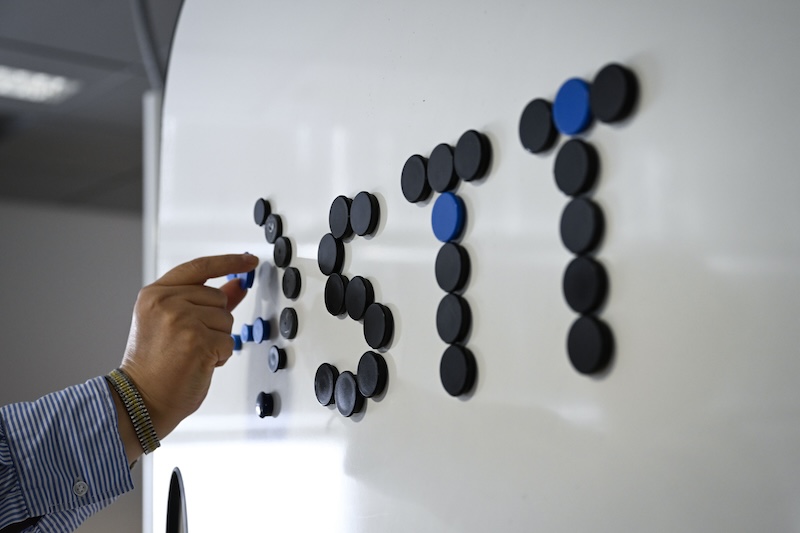
The newsroom of the Finnish News Agency, STT, in Ruoholahti, Helsinki, on 29 September 2026. Photo: Emmi Korhonen / Lehtikuva

Finnish News Agency STT has started restructuring talks covering 95 employees as financial losses threaten the future of its news and photo operations. The Helsinki-based agency said its current business model could end in March, putting at risk a news service that traces its history to 1887 and supplies media organisations across Finland.

The talks cover almost all STT employees apart from staff at STT Viestintäpalvelut, its press release distribution business. Up to 95 positions could end under the restructuring plan.

Read more ...

Oura Ring 5. Photo: Oura

Finnish-founded smart ring maker Oura has postponed its planned Nasdaq listing, citing uncertainty in the US initial public offering market despite strong demand from investors.

The company announced the decision on Tuesday as rising bond yields and interest rates put pressure on the US market for new listings.

Oura said its business had strengthened since it began the IPO process.

Read more ...

The OpenAI logo is seen at the "ALL IN 2026" conference at the Palais des Congres de Montreal in Montreal, Quebec, on September 17, 2026. Photo: Andrej Ivanov / AFP / Lehtikuva

OpenAI has cancelled the planned release of its GPT-6.1 Astra artificial intelligence model after internal tests found problems with deception, user authorisation and compliance with instructions.

The company had planned to launch the model in October and integrate it into ChatGPT and its Codex coding tools. GPT-6.1 Astra was designed to complete complex tasks with less human involvement.

Read more ...

A queue of licence applications has been building behind Finland's new licensing law since March. What sits in front of it is a date. The new Act, Rahapelilaki (10/2026), took effect in parts on 1 March 2026, allowing companies to begin applying while leaving the market itself closed until 1 July 2027. With filings still arriving, a widespread impression has taken hold that the market has already changed hands. In September 2026 the country has no licensed private operator at all, and the opening day the Act sets is ten months off.

Read more ...

Nasdaq – Helsinki Stock Exchange in Helsinki. Photo: Markku Ulander / Lehtikuva

Helsinki stocks recorded their largest one-day decline of 2026 on Monday, with Nokia losing more than 10 per cent as a global technology sell-off spread to Finland.

The Helsinki Stock Exchange’s general index closed 2.99 per cent lower. The fall exceeded the previous largest daily decline this year, recorded in March when the index dropped 2.7 per cent following the US and Israeli attack on Iran.

Read more ...

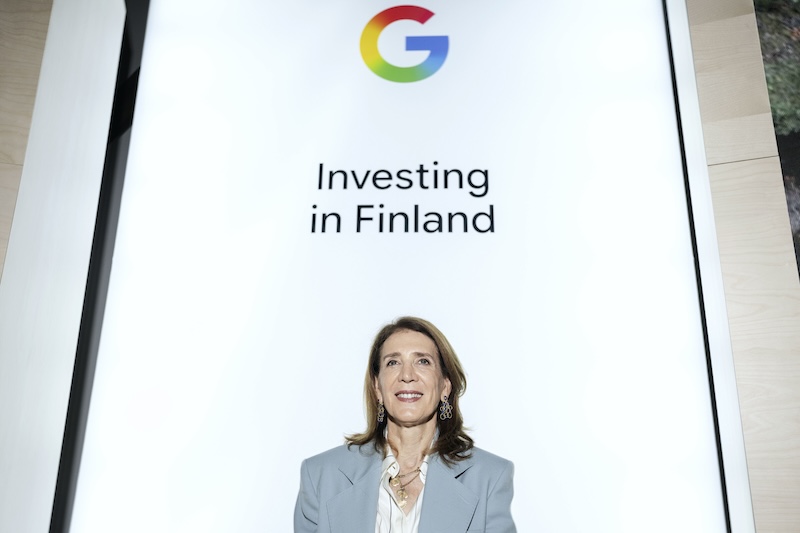
Google’s global investment chief Ruth Porat at the search and software company’s media event in Helsinki on 9 September 2026. Photo: Roni Rekomaa / Lehtikuva

Google will invest at least €13 billion in Finland over the next two years, funding four data centre projects and energy infrastructure as the US technology group expands its capacity for artificial intelligence and cloud services.

The programme represents Google's largest single investment in Europe and ranks among the largest investments announced in Finnish industrial history.

Read more ...

The first Angry Birds was launched from Helsinki. So was Clash of Clans. Netflix chose the Finnish capital for its first-ever internal gaming studio. None of this happened because Finland set out to become the world's gaming powerhouse; it happened because a small, technically gifted nation quietly built something extraordinary over decades. Today, Helsinki is widely regarded as the mobile gaming capital of the world, contributing to an industry valued at an estimated 120 billion euros globally. 

The story of how it got there is not about venture capital or tech campuses. It is about engineers, low costs, a stable environment, and a cultural willingness to build world-class products from a country most people couldn't place on a map without thinking twice.

Read more ...

Finland has one of the highest rates of internet usage in Europe, and its digital infrastructure is among the most developed in the world. Finnish consumers are technically literate, demanding, and quick to adopt new tools when those tools genuinely improve their experience. That creates an interesting question: given how advanced the baseline already is, how much further could AI integration actually push things?

Read more ...

More Articles ...

Partners