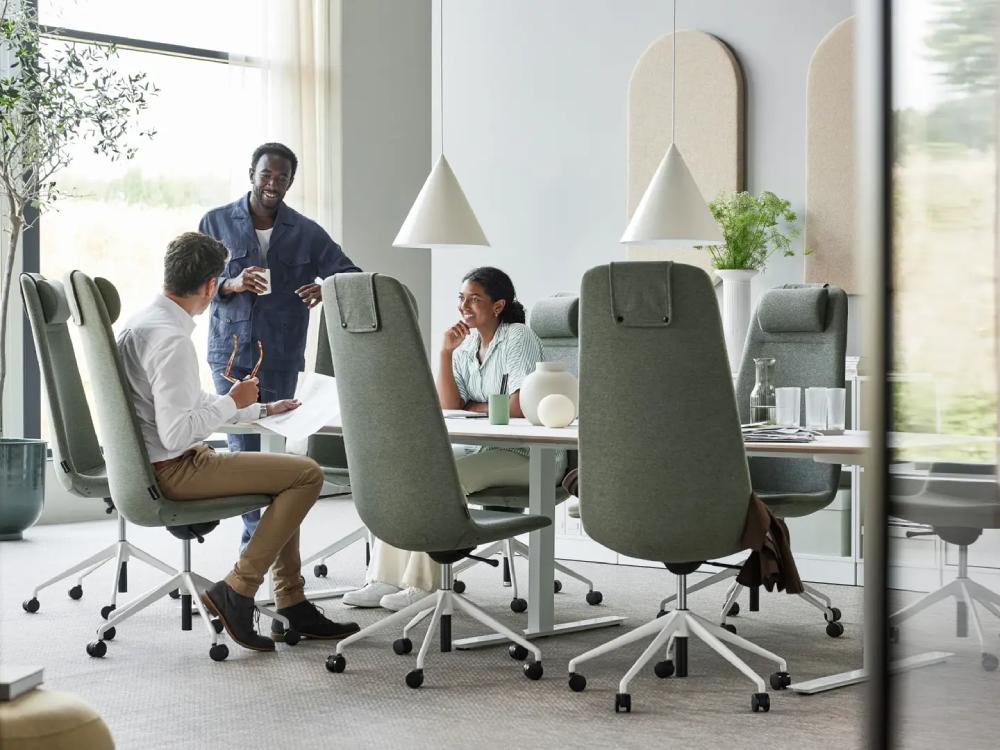
A good workplace isn’t only about how it looks in a brochure, but whether or not you can move through the day without fighting the room. Your chair should support long stretches of focus. Your desk should suit the task at hand. Storage should make sense and shared areas should feel easy to use instead of becoming the place where old equipment goes to retire.
That’s why workplace design often starts with very ordinary questions. Where do you sit? What do you need within reach? Where does paperwork go? How much noise do you deal with? Which spaces need to support deep work, quick meetings, storage, breaks or hands-on tasks?
Those details may sound small, but they shape how your workplace feels from Monday morning to Friday afternoon.
Furniture Has to Match the Work
The best workplace furniture is chosen around the work you’re doing, not only around a style preference. A finance team, warehouse crew, school office, reception area and workshop all need different setups. A beautiful chair isn’t useful if it doesn’t support the job. A sleek desk isn’t enough if there’s no storage or cable control.
That’s where broad workplace suppliers can be useful. A site such as ajtuotteet.fi offers furniture and equipment for offices, warehouses, industrial spaces, schools, break rooms and public areas. The product range includes office furniture, storage solutions, industrial workbenches, transport equipment, school furniture and acoustic products, which makes it relevant when you’re planning spaces that need more than one type of setup.
The best option isn’t buying everything at once. It’s looking at your workplace as a full system. A desk, chair, cabinet, trolley or meeting table should support how you actually work.
Ergonomics Should Be Built Into the Room
Ergonomics is often treated like an individual issue, as if you simply need a better chair and everything else in your life will sort itself out. In reality, your ultimate comfort depends on the whole setup: chair height, desk position, monitor placement, lighting, storage access and how often you need to move around.
Research shows that ergonomic improvements can support work ability, safety and smooth work processes. That’s a good way to think about your workplace because ergonomics isn’t only about avoiding discomfort. It’s also about helping your day flow better when you need it the most. The physical working environment is also one part of the wider conversation around work-life balance in Finland, where employee wellbeing and flexible working practices play an important role.
A height-adjustable desk may support you if you shift between sitting and standing. A proper task chair can make computer work easier and a workbench at the right height can help to support manual tasks. Shelving that’s too high, too low or too cramped can turn simple storage into unnecessary strain.
Good ergonomic planning isn’t glamorous, and that’s exactly the point. It’s background support and when it truly works, you barely notice it.
Storage Shapes How Organised a Space Feels
Storage is one of those things you underestimate until your workplace starts looking like every surface has surrendered to the chaos. Files, tools, packaging, samples, cleaning supplies, spare equipment and personal items all need a proper home.
Good storage makes your workplace calmer. Cabinets, shelving, lockers, drawer units, archive storage and mobile trolleys can all help, depending on the type of space. An office may need enclosed cabinets to keep paperwork tidy. A warehouse may need pallet racking, labelled shelving and transport equipment. A school or shared workplace may need lockers so personal items don’t end up scattered across desks.
The point isn’t to hide clutter and pretend the job is done. Storage should make items easier to find and return. If you have to move three boxes to reach one folder, the system won’t last. If equipment has a clear place, the room has a better chance of staying usable.
A tidy workplace doesn’t happen by accident. It’s usually the result of practical furniture choices that make the organised option the easiest one.
Flexible Spaces Need More Thought
Many workplaces now have to support more than one type of activity. A meeting room may need to become a training space. A break area may also host informal conversations. A small office may need quiet desks, storage and occasional collaboration space all in the same footprint.
Flexible furniture can help, but only when you choose it carefully. Folding tables, stackable chairs, mobile whiteboards, acoustic screens and modular storage can all make a space easier to adapt. The trick is knowing what kind of flexibility your workplace actually needs.
A room that changes layout every week needs furniture that’s easy to move and store. A room that hosts focused work needs sound control and visual separation. A reception area needs comfort, durability and a clear first impression and a warehouse or workshop needs flexibility that supports safety and workflow, not just rearrangement.
Better workplace design starts with paying attention to how you really use the space day to day. The strongest workplaces don’t need fancy chandeliers and wall art; they just need the right furniture, storage, ergonomics and layout to make the work feel easier.