

Here is a selection of what the international press has published about Finland in the last week:
Can a Finnish sauna improve society?
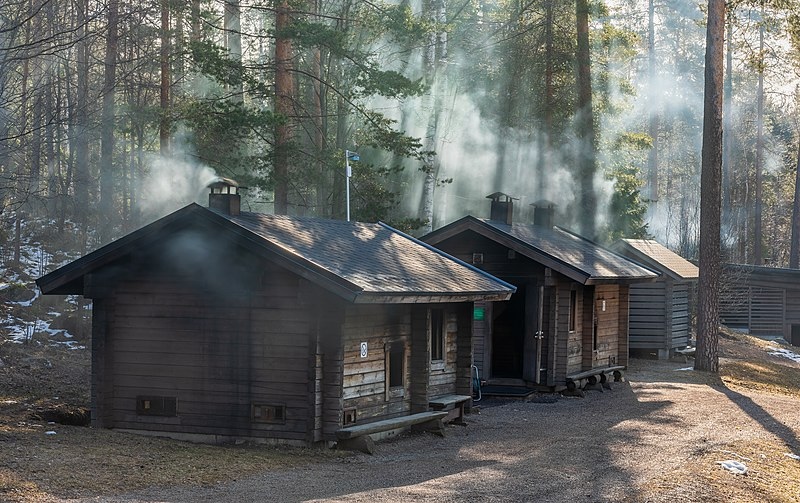
The societal significance of Finnish saunas was covered in an article by The New York Times on March 4.
The article explores the importance of Finnish saunas, highlighting their impact on architecture and society, particularly in relation to sustainability and tradition.
Set in Fiskars, a former industrial town in Finland now transformed into an artists’ colony, the article focuses on a sauna designed by architects Laura Mattila and Mikko Merz in 2017. The structure, made up of two 135-square-foot rooms—a sauna and a changing room—blends traditional Finnish building methods with modern design sensibilities. While the architecture is elegantly simple, with timber joints and a connection to the surrounding forest, Mattila emphasizes its functional aspects, such as linen insulation, heat retention, and the adaptability of wood over time.
“If you think of a Finnish farmhouse, this is essentially how you build it: a log frame, an oven for baking and, once you’ve lived there for a while, you make another log frame and fill the gap between,” Mattila says.
The article also traces the origins of Finnish saunas, noting their development over 3,000 years. Early Finns built portable barns using ax-hewn logs, which they used for drying crops by trapping smoke inside. This technique not only dried their grain but also warmed the timber, giving rise to the traditional smoke sauna, or ‘savusauna’, a practice still popular today.
The article suggests that Finnish saunas offer a model for sustainable architecture. By utilizing local materials, passive heating, and minimal environmental impact, the sauna serves as both a functional and culturally rich space. The Finnish sauna, rooted in both history and practicality, offers valuable lessons for modern architecture, demonstrating that simple yet well-designed structures can enhance society.
Original story was published by The New York Times on 04.03.2025 and can be found here.
What Finland can teach us about preparing for disasters
Finland’s disaster preparedness was covered in an article by The Tyee on March 6. The article examines Finland’s approach towards disaster preparedness and comparing it to the state of preparedness in other countries, including Canada.
It begins by addressing the unpredictability of crises, exemplified by recent global political events that have the potential to escalate into widespread disruptions. While many governments, including Canada’s, offer emergency preparedness guides for natural disasters and other emergencies, the article emphasizes that these guides often go unnoticed until a crisis strikes.
Finland stands out with its highly interactive and multilingual preparedness guide, Preparing for Incidents and Crises, available through the Suomi.fi web service. This guide covers a broad spectrum of potential disasters, including pandemics, terrorism, cybersecurity, and even radiation hazards. One of its key features is its accessibility to refugees and immigrant communities, offering information in multiple languages. The guide also includes practical advice, such as how to handle a nuclear accident, and is regularly updated based on user feedback, which helps improve its relevance and usability.
A crucial aspect of Finland’s preparedness approach is its emphasis on community cooperation. The Finnish guide stresses the importance of building interpersonal relationships and community engagement during normal times so that individuals and communities are ready to help one another during a crisis. This cooperative approach aligns with similar principles outlined in British Columbia’s emergency preparedness guidelines, which encourage neighbourhood-level preparedness.
The article argues that Canadians can learn valuable lessons from Finland’s comprehensive, interactive approach to disaster preparedness, which is not just about individual survival but about strengthening communities to weather crises together.
Original story was published by The Tyee on 06.03.2025 and can be found here.
UNICEF and Finland empowering women through fem tech startups in emerging economies
UNICEF and Finland’s collaboration to empower women through fem tech startups in emerging economies was covered in an article by Financial Express on March 7. The article provides details of the global initiative aimed at addressing systemic challenges faced by women and girls.
The initiative, launched by the Embassy of Finland in New Delhi on the eve of International Women’s Day 2025, invites tech startups in low- and middle-income countries to develop fem tech solutions that focus on health, education, and socio-economic inclusion for women and girls.
The UNICEF Venture Fund, in partnership with Finland, will provide grants and mentorship to early-stage startups working with advanced technologies like Artificial Intelligence (AI) and blockchain. This initiative is designed to support innovations that directly impact women’s healthcare access, financial inclusion, and overall empowerment in emerging regions like India.
“Investing in fem tech solutions is essential to unlocking their full socio-economic potential. Finland and UNICEF are united in their mission to accelerate innovation in emerging economies like India to make a global social impact,” Kimmo Lähdevirta, Ambassador of Finland to India said.
The call for applications will be an ongoing process until 2030, aiming to discover scalable solutions that tackle key issues such as cervical cancer, child marriage, genital mutilation, and exclusion from education and employment. The initiative is expected to create lasting social change by harnessing the potential of AI and blockchain to develop technologies that can close gaps and improve outcomes for women and girls.
Original story was published by Financial Express on 07.03.2025 and can be found here.
Finnish space center monitors climate change on the front line
This article about the Finnish Meteorological Institute's Arctic Space Center in Sodankyla, playing a critical role in studying climate change in the Arctic region, was published in Phys.org on March 5. The article highlights how the center, situated in a remote area of northern Finland, uses both satellite data and ground measurements to study environmental changes, particularly focusing on snow and ice cover.
The Arctic region is warming at an alarming rate, nearly four times faster than the rest of the globe. The center, located near the Russian border, has 550 measurement devices scattered across the area, including instruments for monitoring greenhouse gases from trees, soil, and the atmosphere. This research is crucial for understanding how climate change, driven by human activity, is affecting the Arctic ecosystem and the global climate.
The article also emphasizes that changes in the Arctic, such as melting permafrost and rising temperatures, will eventually impact other regions, but these changes occur more rapidly in the Arctic. The work conducted at the Arctic Space Center is instrumental in validating satellite data, especially as access to Russian territory (Siberia) for such research has become limited due to geopolitical tensions.
The European Space Agency (ESA) has partnered with Finland to launch the “Arctic-Boreal Earth Observation Supersite” to enhance climate monitoring. With political challenges preventing collaboration with Russia, Finland’s role has become even more critical in providing ground truth data for satellite observations.
Original story was published by Phys.org on 05.03.2025 and can be found here.
HT


