

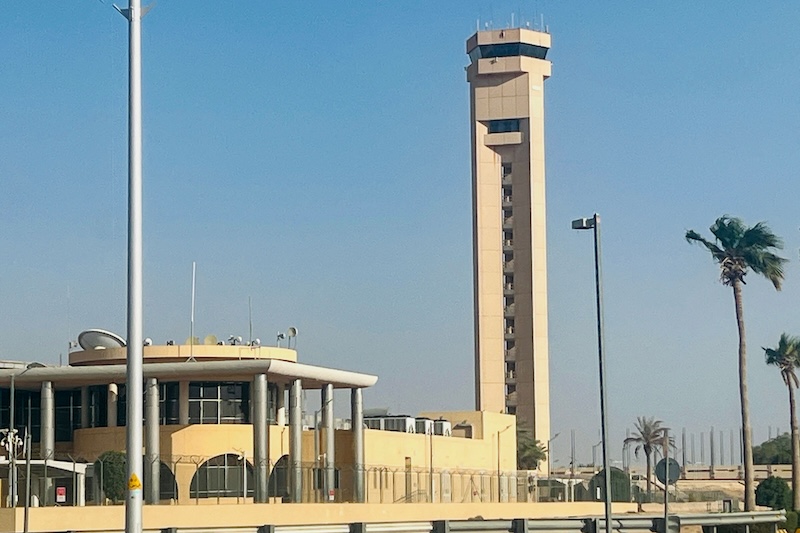
Saudi Arabia has reported 12 deaths and 309 injuries following an attack on King Khalid International Airport in Riyadh on Saturday, 10 October, blaming Yemen’s Houthi movement for the strike. The Saudi-led military coalition has pledged retaliation, while US President Donald Trump said Washington was considering joining military operations against the group.
The Saudi General Authority of Civil Aviation (GACA) said the dead included four Saudi nationals, two Bangladeshis and one citizen each from the United States, Jordan, Palestine, Syria, Sudan and Egypt. Several injured passengers and airport workers remained in critical condition.
The attack was the third on the airport within a week and the deadliest strike on Saudi territory in more than a decade. Previous attacks on Thursday killed several people and damaged an aircraft parked at the airport.
Reuters reported that hospitals received casualties transported by ambulances and helicopters. An eyewitness described an explosion followed by scenes of injured people lying inside the terminal. One wounded traveller told the news agency that part of the ceiling near a departure gate collapsed after an object crossed the sky.
Saudi authorities suspended airport operations and diverted incoming flights. A Notice to Air Missions extended the closure until 21:00 GMT on Sunday, 11 October, while officials assessed damage to airport facilities.
Kuwait Airways cancelled two flights scheduled between Kuwait and Riyadh on Sunday. Jazeera Airways also reported disruption to its services, while India's Akasa Air extended its suspension of Saudi flights until Tuesday.
Schools across Riyadh will conduct lessons remotely for one week following instructions from the Ministry of Education, AFP reported, citing an email sent to parents.
Saudi-led coalition spokesperson Major-General Turki al-Malki described the airport attack as a war crime and promised a response under international humanitarian law. The coalition also reported intercepting a drone in eastern Saudi Arabia and a separate projectile landing near King Fahd International Airport in Dammam.
The Houthis have not formally claimed responsibility for Saturday's attack, although their media office said the group had shut down Riyadh's airport. Houthi military spokesperson Yahya Saree renewed warnings to airlines and travellers against using Saudi airports and airspace, excluding Mecca and Medina.
The attacks follow renewed fighting in Yemen between the Houthis and forces supporting the internationally recognised government. Saudi Arabia has conducted air strikes against Houthi positions while Yemeni government troops have launched operations around Taiz and territory near the Red Sea.
The conflict intensified after a ceasefire established in 2022 unravelled earlier this year. Saudi Arabia originally entered Yemen's civil war in 2015 to support the government against the Houthis, who seized the capital, Sanaa, in 2014.
Trump described Saturday's attack as “terrible” and said he intended to speak with Saudi Crown Prince Mohammed bin Salman.
Asked whether American forces would participate in strikes against the Houthis, Trump told reporters: “We may. We're going to look at it.”
US Secretary of State Marco Rubio confirmed that an American citizen was among those killed and demanded an end to attacks against civilians.
United Nations Secretary-General Antonio Guterres condemned the strike, stating that attacks on civilians and civilian infrastructure violate international law and “must cease immediately”.
UN special envoy for Yemen Hans Grundberg warned that attacks on Saudi airports threatened regional security and complicated efforts to end Yemen's conflict.
Qatar, Kuwait, Egypt, Jordan, Syria, Pakistan, India and several other countries condemned the attack. Oman's government called for restraint and urged parties to avoid further escalation.
Canadian Prime Minister Mark Carney said attacks against civilian infrastructure had “no justification”, while Pakistani Prime Minister Shehbaz Sharif reaffirmed his country's commitment to Saudi sovereignty and security.
The US, British, Canadian and other foreign missions advised their nationals to avoid Riyadh airport. The US embassy also introduced additional travel restrictions for government personnel using airports in Riyadh, Jeddah and Dammam.
Despite the disruption, organisers of the World Petroleum Congress and Future Investment Initiative said their events in Riyadh would proceed. Delegates received information about alternative travel routes, including journeys from Dammam.
HT


