Sweden’s parliamentary election remained on a knife edge late on Sunday, with the opposition holding a projected one-seat majority over Prime Minister Ulf Kristersson’s governing bloc. SVT forecast 175 seats for the opposition and 174 for the right, the minimum margin needed for control of the 349-seat Riksdag.
With most districts counted, the two blocs were separated by only a fraction of a percentage point.
The Social Democrats led by Magdalena Andersson remained the largest party with about 28 per cent of the vote. The Moderates were on roughly 20 per cent, while the Sweden Democrats had fallen to around 18 per cent.
The projected result would give the Social Democrats, Left Party, Centre Party and Greens 175 seats. The Moderates, Sweden Democrats, Christian Democrats and Liberals were projected to take 174.
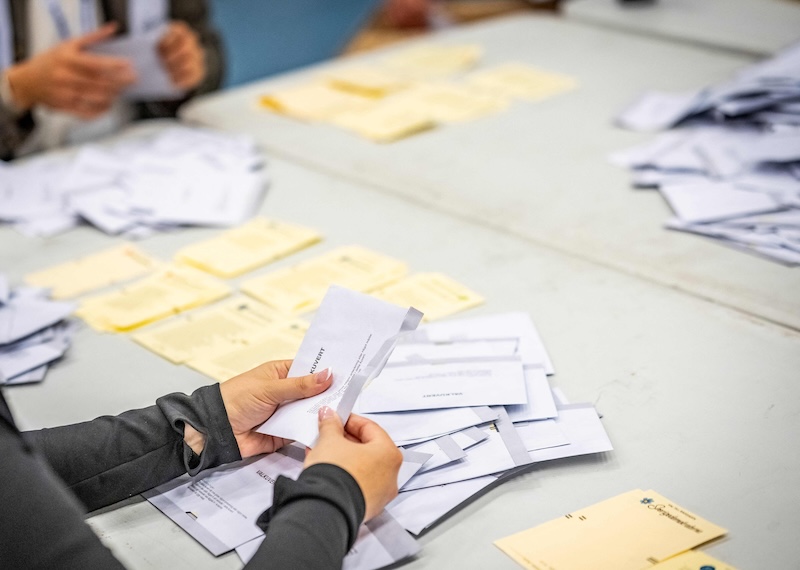
The result might not be settled until Wednesday, when overseas ballots and other votes not included in election-night counting are added. More than 200,000 such ballots were counted after each of the past two elections.
That leaves both blocs waiting before making firm claims about government formation.
Prime Minister Ulf Kristersson has said the race is not over. He told Aftonbladet before the count was complete that a winner should only be declared once a prime minister has secured sufficient parliamentary support.
Sweden uses a form of negative parliamentarism. A candidate for prime minister does not need an absolute majority in favour, but must avoid having 175 or more MPs vote against them.
That system means the final seat count will not by itself settle who forms the next government.
The opposition also faces internal tensions. The Centre Party has said it will not join a government containing Left Party ministers, while the Left Party has demanded representation in any Andersson-led administration.
The right has a clearer framework through the Tidö cooperation between the Moderates, Christian Democrats and Liberals, supported during the past term by the Sweden Democrats.
The Sweden Democrats are heading towards their first electoral decline under Jimmie Åkesson, who has led the party since 2005. Preliminary figures put the party down about 2.8 percentage points from 2022.
The party entered the election seeking a formal place in government after four years of supporting Kristersson from outside the cabinet.
The Moderates, by contrast, were on course to overtake the Sweden Democrats and regain second place nationally.
The Liberals also appeared set to clear the four per cent parliamentary threshold after months of uncertainty over whether they would remain in the Riksdag.
Early exit polls had pointed to a clearer opposition lead. SVT’s Valu survey put the opposition parties on 51.3 per cent against 46.8 per cent for the right. TV4 produced a similar result.
Later projections narrowed that gap to about 20,000 votes.
Healthcare, crime, immigration and household finances were among the main campaign issues. The final weeks also centred on disputes over migration policy, policing and the role of the Sweden Democrats in a future government.
If the one-seat projection holds, coalition negotiations are still expected to be difficult.
HT