

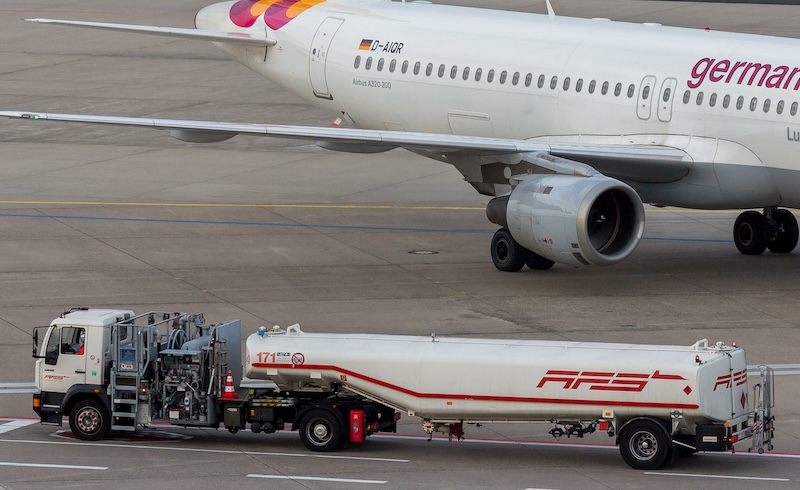
European airports have warned that jet fuel supplies across the continent could fall short within three weeks if shipments through the Strait of Hormuz do not resume.
The warning came in a letter from Airports Council International Europe to EU transport commissioner Apostolos Tzitzikostas, first reported by the Financial Times. The group said current stock levels were falling and called for urgent action across the bloc.
The industry body said a continued disruption to flows through the Gulf route would lead to a “systemic jet fuel shortage” across the EU.
The strait remains restricted despite a ceasefire agreement between the United States and Iran announced earlier this week.
Oil markets have reacted since the conflict began. Brent crude rose to about $96 per barrel, up from around $72 before the escalation. Data from the International Air Transport Association showed jet fuel prices have more than doubled year on year, reaching about $1,650 per tonne.
ACI Europe said the impact would extend beyond aviation. Air transport supports €851bn in gross domestic product and 14 million jobs across Europe, based on pre-crisis figures cited in its letter. Airports handle about 26 per cent of exports by value.
Olivier Jankovec, director general of ACI Europe, said in the letter that a shortage would “significantly harm the European economy”. He also said there was no EU-wide system in place to track jet fuel supply and demand.
The group urged the European Commission to map current stock levels, identify alternative suppliers and assess risks to fuel distribution within the bloc. It also called for joint fuel purchasing and temporary changes to import rules.
The letter proposed lifting restrictions linked to the EU methane regulation, which is due to take effect in 2027. ACI Europe said these rules have already discouraged suppliers outside the bloc from entering contracts for summer deliveries.
Europe depends on imports for most of its aviation fuel. More than 60 per cent comes from Gulf refineries, with over 40 per cent passing through the Strait of Hormuz. The route has limited alternatives for refined fuel shipments, unlike crude oil which can move through pipelines.
Shipping data cited by The Guardian showed that the last cargoes sent before the disruption are now arriving in Europe. A tanker delivered part of its load to Rotterdam earlier this week and is due to reach Copenhagen next. Another vessel arrived in the United Kingdom from Saudi Arabia on Tuesday.
Airlines have begun to respond to rising costs. Several carriers have cut routes and raised fares. SAS said in March that it would cancel about 1,000 flights in April due to fuel costs, while Poland’s LOT has reduced less profitable routes and plans price increases.
In Italy, four airports imposed fuel limits last weekend after supply disruptions linked to a broker, according to regional reports. The restriction did not stem from the Hormuz closure but added to pressure on supply chains.
Asian markets have already faced shortages. Vietnam and other countries have introduced rationing measures for jet fuel, according to regional reports.
ACI Europe also noted increased demand from military operations as a factor reducing available supply for civil aviation.
HT


