

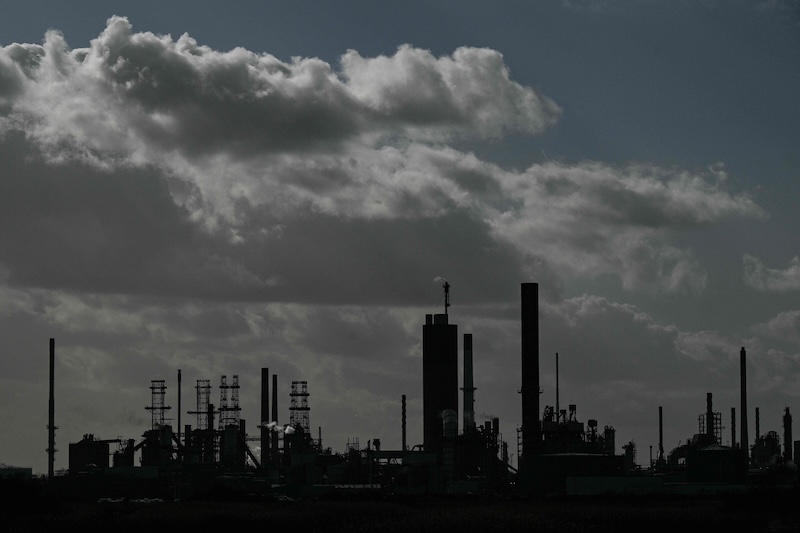
The International Energy Agency agreed to release 400 million barrels of oil from emergency reserves after the Iran war halted shipping through the Strait of Hormuz and drove global crude prices above $100 a barrel. The decision marks the largest coordinated release of strategic oil stocks since the agency formed in 1974.
The International Energy Agency approved the largest coordinated release of oil reserves in its history after the US–Israeli was against Iran disrupted global energy markets and halted tanker traffic through the Strait of Hormuz.
Member states agreed to place 400 million barrels of crude on the market in an attempt to limit supply disruption and ease price pressure after Brent crude surged more than 25 percent since the conflict began on 28 February.
The Paris based agency said the decision followed a unanimous vote by its 32 member governments.
IEA executive director Fatih Birol said the scale of the disruption forced governments to take action.
“The oil market challenges we are facing are unprecedented in scale,” Birol said in a statement. “IEA member countries have responded with an emergency collective action of unprecedented size.”
The volume exceeds the 182 million barrels released by IEA members in 2022 after Russia launched its invasion of Ukraine.
The agency stated that global markets have lost close to 15 million barrels of crude each day because shipments through the Strait of Hormuz have dropped to less than 10 percent of normal levels.
The waterway carries close to one fifth of the world’s oil supply.
Iran threatened attacks on tankers passing through the narrow channel after United States and Israeli strikes on Iranian targets. Military officials in Tehran warned that vessels linked to the United States, Israel and allied states would face attack.
Iran also targeted oil fields and refineries across Gulf states, aiming to generate enough global economic pain to pressure the U.S. and Israel to end their strikes.
IEA members hold more than 1.2 billion barrels in government controlled emergency stocks. A further 600 million barrels sit in industry reserves held under government rules.
Member states must maintain reserves equal to at least 90 days of national oil consumption.
Birol said the reserves would reach the market through national release programmes adjusted to domestic conditions.
“We will make the emergency stocks available to the market over a timeframe appropriate to the national circumstances of each country,” he said.
Several countries confirmed contributions within hours of the announcement.
Japan said it would release about 80 million barrels starting on 18 March to stabilise markets. South Korea pledged 22.46 million barrels.
Germany’s economy minister Katherina Reiche said Berlin would supply close to 19.5 million barrels. “Germany stands behind the IEA’s most important principle: mutual solidarity,” Reiche told reporters in Berlin.
The United Kingdom pledged 13.5 million barrels, and France committed 14.5 million barrels.
United States energy secretary Chris Wright confirmed that Washington would release 172 million barrels from the Strategic Petroleum Reserve as part of the coordinated action. The deliveries will begin next week and continue for about 120 days.
Despite the scale of the intervention, analysts said the volume represents only a small portion of global demand.
Macquarie analysts estimated the release equals about four days of worldwide oil production. The amount also represents roughly 16 days of normal crude shipments passing through the Gulf region.
The International Energy Agency created the emergency reserve system after the oil crisis of the 1970s.
Since then the organisation authorised coordinated releases five times. Those actions occurred during the Gulf War in 1991, after Hurricane Katrina in 2005, during the Libyan conflict in 2011 and twice after the Russian invasion of Ukraine.
The present intervention stands as the largest release since the programme began.
HT


