

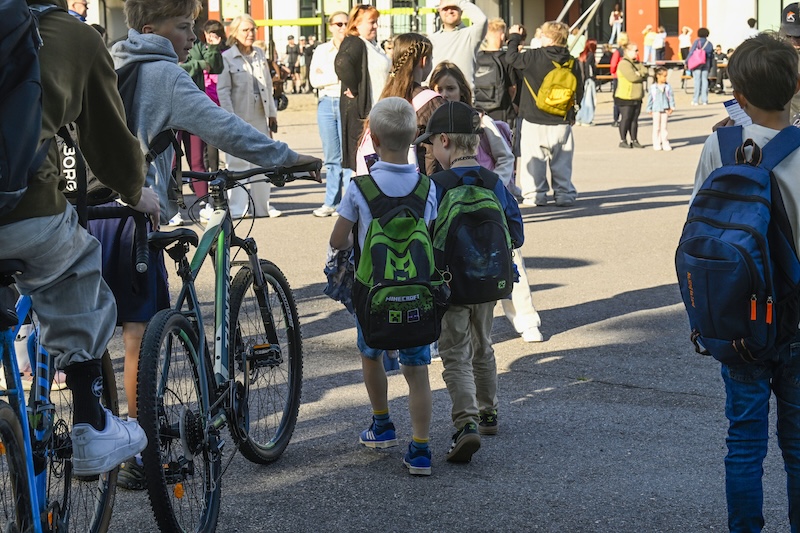
Schools across much of Finland began the 2026–27 academic year on Wednesday, with pupils returning under new rules covering physical activity, learning support and language teaching. Helsinki, Oulu, Jyväskylä, Joensuu, Lahti and Rovaniemi are among the cities starting classes on 12 August.
Espoo and Vantaa start on Thursday, while pupils in Kokkola, Turku and Pori returned on Tuesday. Tampere started its term on 6 August, according to the Finnish National Agency for Education.
Municipalities and other education providers decide when their academic year starts. Finnish law normally sets 190 school working days, with certain public holidays deducted when they fall on weekdays.
The 2026–27 academic year therefore has 189 working days. All comprehensive schools finish on Saturday, 5 June 2027.
The start of the term also brings changes to everyday school life. Education providers in pre-primary and comprehensive education now have a legal duty to promote physical activity alongside teaching. The measure follows restrictions on mobile devices introduced at the start of the previous school year.
Phones and other mobile devices remain restricted during lessons. Pupils need a teacher's permission to use them for educational or health reasons.
The Finnish National Agency for Education has also recommended restrictions during breaks and other periods without classroom teaching.
The physical activity requirement places a new responsibility on schools to give children opportunities to move during their school day. The Finnish National Agency for Education says research links movement during the school day with concentration, learning, behaviour and pupils' experience of school.
Changes to learning support also continue. Finland revised support in pre-primary, comprehensive and upper secondary education in August 2025. The system places more emphasis on providing assistance within the pupil's own teaching group before individual measures become necessary.
Vocational education joined the reform on 1 August this year. Students now have a right to learning support throughout their studies, including support linked to workplace learning. The agency says the system seeks to help students progress through their qualifications and move into employment or further study.
Schools also face changes aimed at pupils whose first language is not Finnish or Swedish. Education providers now have the option of giving one year of additional instruction to pupils moving from preparatory education into comprehensive school. Decisions over whether pupils study Finnish or Swedish as a first or second language will focus on their language skills rather than the mother tongue registered in population records.
Another change starts in upper secondary education. Seven schools are introducing English-language programmes this month, with 132 students selected for 170 places, according to the Finnish National Agency for Education. English-language matriculation examinations are scheduled to start in autumn 2028.
Further changes to comprehensive education are already in preparation. Parliament approved legislation on a competence guarantee in June, according to the agency. The reform will introduce national assessment procedures, including criteria for grades 10, 8 and 5 across subjects and year groups.
The Finnish National Agency for Education is due to revise the national curriculum framework by the end of October 2027. Local curricula must follow the new framework from August 2028. Earlier agency material said the reform seeks to establish minimum competence requirements for progression between year groups.
Autumn holidays will fall mainly during weeks 42 and 43. Christmas holidays in many municipalities run from around 22 December until 6 January, while winter holidays will take place in stages between 22 February and 12 March.
HT


