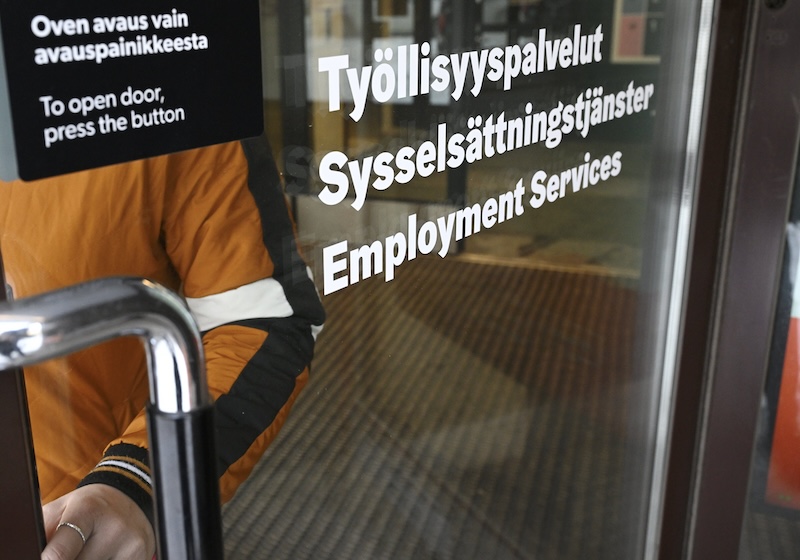
Employment advisors across Finland are facing increasing pressure as they manage growing caseloads, with some responsible for more than 250 jobseekers each. The average nationwide stands at 149, according to spring data from the KEHA Centre, which oversees the regional administration of labour services.
The shift of responsibility for employment services from the national TE Offices to municipalities earlier this year has led to significant regional disparities. While some areas maintain ratios close to 100 jobseekers per advisor, others, such as Lahti, are experiencing the highest recorded figures in the country.
Johannes Volmanen, an employment specialist in Lahti, currently supports over 250 clients.
“Put simply, it’s too much for me to do my job well,” he said. “We do what we can.”
Volmanen said the restructuring of services under the new municipal-led model is ongoing, while municipalities also grapple with budget constraints and rising unemployment.
Statistics Finland reported this week that unemployment reached 10.2 percent in the second quarter. Over the past two years, the country has lost 64,000 jobs. Extended unemployment spells have become common, increasing pressure on municipalities, which are now partly responsible for unemployment benefits.
“Time between contacts can stretch out,” Volmanen said. “You just can’t focus on each person as much as you’d like.”
He noted that although he cannot influence the job market, he tries to support individuals in finding direction or identifying opportunities.
KEHA project manager Eero Janhonen explained that the advisor-to-client ratios do not fully capture individual workloads. In some regions, clients are registered under one advisor as part of a team system, which inflates the figures.
The KEHA Centre is collecting data to assess whether municipalities can sustain service levels after the reform. Janhonen said the current situation mirrors that under the previous TE Office system.
“It remains to be seen whether municipalities will invest more resources or reduce services, which would impact staffing,” Janhonen said.
She said a ratio of 100 jobseekers per advisor is reasonable and allows time for meaningful engagement, although support needs vary significantly depending on whether the jobseeker is fully unemployed or in part-time work.
According to Erja Lindberg, Development Manager at the Association of Finnish Cities and Municipalities, recruiting enough qualified advisors has been a challenge. Not all staff from former TE Offices transitioned into the new system.
“There could definitely be more people, especially now that unemployment has risen,” she said.
KEHA’s figures placed Lahti at the top with a client-to-advisor ratio of 256. But Maarit Ahomäki, who manages employment services in Lahti, said the real number is closer to 160.
“The total number of clients was divided among a smaller group of advisors in the data,” she said. “The holiday season has also slowed operations.”
Ahomäki said new advisors will be hired in autumn to ease the pressure. The region is also preparing for better times by building up employer services.
“We’re making sure employers get the support they need,” she said. “They’re the ones creating jobs.”
HT