


Helsinki Music Week returned for its second edition with a programme that treated the city less as a backdrop than as part of the performance. Across five days, from 13 to 17 May, the festival moved through churches, clubs, theatres and a public sauna, placing experimental music in direct contact with Helsinki’s architecture and nightlife.
For visitors, the format offered a route through the city. For locals, it reframed familiar places. Temppeliaukio Church, Helsinki Cathedral, Dance House Helsinki, Ääniwalli, Post Bar and Kulttuurisauna each carried a different part of the programme, from ambient and organ works to rap, club music, panels and sauna sound pieces.
 |
| Erika Sirola and Murrettumeri opening Helsinki Music Week at Temppeliaukio Church on 13 May. Photo: Niklas Hampinen |
The opening night at Temppeliaukio Church set the tone. The venue’s stone walls and copper dome gave the performances a weight that few festival stages can match. Erika Sirola and Murrettumeri used voice and organ to fill the space with a sound that felt tied to the building itself. Malibu followed with an ambient set that suited the church’s slow resonance.
 |
| VS-55 performing in the Helsinki Cathedral on 15 May. Photo: Niklas Hampinen |
The use of Helsinki Cathedral on Friday pushed the same idea further. Klein, Dualspines, VS–55 and Joanne Robertson performed in one of the city’s most recognisable sites, giving international experimental music a setting that many visitors know first as a landmark, not a stage.
The club programme gave the week its harder edge. Ääniwalli hosted CRYSTALLMESS, Varg²™, TeeboFG, jamesjamesjames and swedm®, linking rap pressure, techno, EDM memory and internet-shaped club culture in one long night.
 |
| Sassy performing at the Helsinki Music Week Finale at Dance House Helsinki on 16 May. Photo: Niklas Hampinen |
Dance House Helsinki carried the festival’s wider range. MELO presented his STALLION album release show on Thursday. The Saturday finale brought together Orvokki, Hopeasiivet, hän, Glayden, Kittin, Sassy 009, Mechatok, Isabella Lovestory and Danny L Harle, with a second room featuring FINNJÄVEL, Priori and Jori Hulkkonen.
The Finnish acts mattered here. Hopeasiivet showed how local indie-pop has moved from small rooms into the festival circuit. Glayden brought Helsinki’s underground electronic scene into a larger frame. hän, the live-only project by Aino Morko, gave a spotlight to work that exists outside standard release cycles.
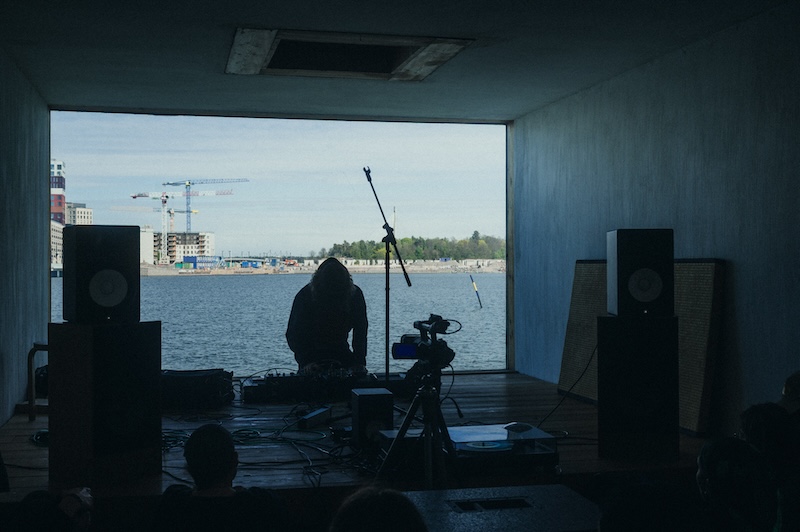 |
| Shadow Bath - Ambient Sauna Experience at Kulttuurisauna on 17 May. Photo: Niklas Hampinen |
That Sunday programme at Kulttuurisauna captured what makes the event distinct. Shadow Bath mixed ambient sound, coffee, sauna and swimming into a modern experience rooted in everyday Finnish culture.
The talks also gave the week a wider frame, with discussions on sound, image, distribution, DIY production and the future of music culture.
Helsinki Music Weeks' second edition did not try to become a standard city festival. It built a map of Helsinki through sound, subculture and setting.
It offered a clear invitation: enter the city through its music, and the buildings start to sound different.
 |
| Helsinki Cathedral during Helsinki Music Week. Photo: Niklas Hampinen |
HT


